Saturday, September 18, 2010

Call me Laertes…or Tiresias (I can’t decide)


I mentioned in the last post that the blog has been a little quiet due to travel and illness. But the travel included a seven day introductory field trip across California with the incoming UCD ecology graduate students (called the Odyssey, hence the post title). I kept an old-fashioned[1] journal during the trip (we did not have internet access). So over the course of the next week or two, I am going to turn it into a retrospective travel blog at:

http://stanfordodyssey.blogspot.com/

This post was written while listening to The Mars Volta station on Pandora
___________
[1] Of the moleskine variety

Sunday, September 5, 2010

Calling in Sick

I am calling in sick to my blog. Too much traveling and a multiple week illness have left me too spent to finish up any original content (though I got several new things started[1]). So I am phoning this one[2] in with a few links.

I preached at my brother’s church in Madison. It was a lot of fun and the mp3 is up. I wrapped up with my thoughts on what the movie Hurt Locker was actually about.

More YouTube fun at Twilight’s expense.


I have given a lot of thought to why Jon Stewart is considered the “Most Trusted Name in News” despite his propensity for unfair clips and obvious partisanship. I find this designation particularly interesting because I basically share the opinion despite the fact that I feel like he has a pretty good understanding of his rhetorical slight of hand. But I think this clip (starting at minute 7:00) gets at it:

The Daily Show With Jon StewartMon - Thurs 11p / 10c
Extremist Makeover - Homeland Edition
http://www.thedailyshow.com/
Daily Show Full EpisodesPolitical HumorTea Party


Simply put…Jon is the only pundit I have heard say “You know what, I was wrong.” And I have heard him say it on multiple positions. This humanizes him and builds trust. I am more likely to trust someone who can be moved off a position by strong argument. It makes me feel like he is on a quest for understanding rather than a Beck or an Olbermann…a Rush Limbaugh or a Michael Moore…people who I seem to simply want to propogate an ideology. Now this may be a studied polemical trick like his slick cutting and his endearing self deprecation…but it almost certainly plays in why I trust him.[3]
___________
[1] Including some surprising insights on climate change from the Environmental and Water Resources Institute conference.
[2] Get it? That is a pun with calling in sick. Yeah, that is about as funny as I am feeling right now.
[3] The second clip in this episode is also hilarious.

Wednesday, August 11, 2010

Fragments and Links 8

It has been a while since I have done one of these, so it got a little longish. As usual, these are ideas, thoughts or links that I liked but did not warrant a dedicated post.

I love the new alexonfire song The Northern and the video is mildly disturbing but gorgeous.


I was obviously intrigued by the source and motivation of the track. This was what I found:

"Alexisonfire vocalist George Pettit…(said): “We stole all the lyrics from this Methodist hymn called Roll, Jordan, Roll which is believed to be the first track that inspired people to first play the blues. It’s like an acknowledgment of our musical roots. It’s very religious, but we’re by no means religious.”

A couple months ago I mentioned that several students put together a film to promote our campus ministry’s spring retreat that was remarkably executed. Well, apparently, I wasn’t excessively biased in that estimation. They actually submitted the piece to the annual UC Davis film festival and the second episode was accepted and featured with about a dozen other films.[1]


Patch Sloan Episode 2: The Fall Guy from Matthew Francis Pye on Vimeo.

Another student affiliated with our campus ministry had three films in the festival and was the big winner on the night (taking home five awards). His stuff is great.

And on the topic of short film. Ford, an occasional commenter on this blog has put together this brilliant deconstruction of campaign ads:


Last week Amanda came home with a box of velociraptor ‘bones’ and no instructions. We had a fun morning playing paleontologist.
This led us to show Charis the video by They Might be Giants[2] “I am a Paleontologist,”[3] which she loved.


One of my friends reminded me of the xkcd comic that went with this exercise:

The power of the velociraptor in the imagination of those of us who grew up with Jurrasic Park is one of my favorite xkcd themes. I even bought the t-shirt. But I find that I never wear it because I am afraid people who aren’t in on “velociraptor awareness day” will just think I am one of “those Christians” that thinks dinosaurs are a hoax.

This reminded me of a fun story from my environmental geotechnical days. Environmental geotechnics is a fancy way to say ‘landfill design.’ My advisor for my first graduate degree was one of the premier landfill design guys in the world[5]. Two of my colleagues did a lot of field work for him and found that they were having trouble picking up women in bars on the road. The seemed to think the problem was when they had to tell the ladies what they were doing in town…something like “I am studying the landfill.” So they concocted this elaborate alternate story that they were paleontologists.[6] They never did tell us if it improved their chances with the Utah bar women…but it was a fun story.

On the topic of fun videos…Dan and I have been trying to recruit an official YouTube consultant for our preaching. The idea here is that there are some people who can search, metabolize and retain an amazing number of entertaining YouTube clips and seem to find connections to one or another of these any conversation they are in. It seems to me that everyone who preaches needs an 18-22 year old who will look over the manuscript or passage and notes and do some free association with their internalized YouTube database. This seems like a great way to craft the most difficult part of any talk…the illustrations. And it might be a great ministry for someone whose talents are otherwise overlooked by the church. One student in particular has sent me this clip. I am sure it has gotten wide distribution, but it is worth looking at if you haven’t seen it yet.


I cut a bunch of stuff about The Wire from this post because it was getting long and I thought I’d give the material a post of its own. But I have found that my experience of The Wire has mirrored my experience of Mad Men. Both were difficult to get into. I quit on both multiple times and only went back to them based on critical acclaim[7] and repeated friend recommendations. Now I love both of them.

I have come to believe that the reason they were both hard to get into was precisely the reason they are both so good. They are both character driven by complex and interesting characters. But this means that the shows require time to build textured compelling characters before they begin to work from strength.


I felt like The Blind Side and Defiance were oddly similar movies for being from such distinctly different genres. They were both profound true stories, that were impossible to totally screw up…but they both suffered from choppy, heavy handed execution.


I am a Soccer guy. I actually still play. And so, it is no surprise that I love the World Cup. For the last several cups I have taken on a pretty substantial challenge, though: to design a pool that makes the event compelling to follow for other people who may not care so much. This is harder than it may seem. The two stage format makes a March Madness type pool impossible. But a ‘draft’ style pool has to be carefully crafted in order to make the early tournament rounds count for anything.[8] I have converged on the following format. Eight participants pick four unique[9] teams apiece in a ‘snake style’[10] draft. Then the accrue points as follows:

Win (outright) = 3 points
Win (in PK's) = 2 points
Tie = 1 point
+1 point for win margin of 2-3
+2 point for win margin of >3
+1 for Golden Boot (top individual goal scorer)
-0.25 for each red card
+1 for best goal differential that fails to advance out of the round robin stage
+1 for the most goalie saves after the round robin stage
-1 for the worst goal differential after the round robin stage
-10 each for most egregious dive and mullet (ok, that one's a joke, but if there was a way to quantify these I'd include them)

I found the following findings from a study on the correlation between money and happiness really interesting: “If the relationship between money and well-being is complicated, the correspondence between personal relationships and happiness is not. The daily activities most associated with happiness are sex, socializing after work and having dinner with others. The daily activity most injurious to happiness is commuting. According to one study, joining a group that meets even just once a month produces the same happiness gain as doubling your income. According to another, being married produces a psychic gain equivalent to more than $100,000 a year.”

So it turns out Jesus was right. Community is fundamental to humanness. Oh, and sex matters and commuting sucks…but we knew that.

I have heard Matt Chandler tell the story of his conversion a couple times. He usually includes his assessment that the Christian scene in the late 1980’s reminded him of a bad Saturday Night Live sketch feel to it[12]. He then quips:

“that is why I became a Calvinist…because I have no idea how anyone became a Christian in that room outside of a sovereign almighty God.”

I have decided that Calvinists sleep better than Armineans…but have a harder time getting out of bed in the morning.

I love having a three-year old in the house. She comes up with some startlingly fresh observations about life…and general hilarity. Here are a few:

She is on the tail end of toilet training which means she gets to wear ‘big girl panties.’ This has led to an unfortunate new name for my boxer shorts…which are now called ‘daddy panties’ in the Gibson house hold.

When she was 2 she also renamed buggers…to ‘nose snacks.’

And finally, there was this:


I could not be more proud. Surely the hokey pokey is not what it is all about. Much could be learned from a 3 year olds refusal to mindlessly sing false cliché.

I don’t usually recommend blogs until I have been following them for a while. As alluded to a couple posts ago, the hallmark of a helpful blog is consistency rather than virtuosity. But if Vegas offered odds on stuff like ‘will this blog be amazing’, I’d put a huge chunk of money on this one: http://askorimagine.wordpress.com/ [13]

I tried to screen capture 8/9/10 at 11:12 and 13 seconds. I missed.
“Truth must be stranger than fiction because we have crafted fiction to suit ourselves.” -GK Chesterton

Amanda asked me what I thought of the Twilight Mom’s phenomena[14] the other day, essentially asking, “Isn’t it a good thing that mom’s and daughters are spending time together and have a common interest.”[15] I responded in my standard bombastic and overstated manner. “I think it is like a father spending time with his son by introducing him to porn.”

Now that is intentionally overstated, but think about it. By introducing his son to porn a father would be celebrating and propagating a distorted image of womanhood, romance and sexuality. He would be doing a disservice to the son’s future wife by building unreasonable and unhelpful expectations of femininity and romance. Similarly, Twilight offers an impoverished vision of romance and a bankrupt view of manhood.[16] It offers a picture of romance that is narcissistic and juvenile.


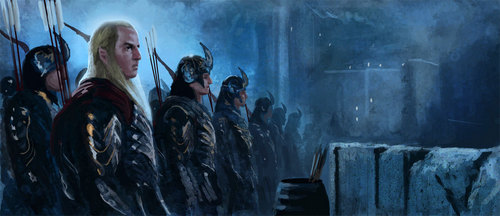
Speaking of vampires…Is it more tragic when vampires die? In that scene in Two Towers[17] when the elves arrived at Helms Deep, when the elves started to die it was more tragic than the other deaths even of humans we had come to care about. Why is the death of an elf or a vampire more tragic? If a creature whose life span has no upper bound[18] by natural causes, dies it is more tragic because they are losing more by two measures. They are losing more future years[19] and they are losing more experiences and memories.

Helms Deep Painting

…and speaking of intentionally overstated…David over at Signs of Life started a discussion on an author’s assertion that calling a white person “racist” is the equivalent of a white person using the n-bomb. I have come to expect helpful discussions on this blog, but this one exceeded my expectations. I even got involved…as did the original author.

I was going through some old notebooks yesterday. I found my notes from my first day of graduate school. My soil mechanics class was taught by Dr Boscher, a Christian who died tragically of cancer since we left. I was thinking of him…mourning a little as I handled the notebook. Then I opened to the first page. At the very top of the first page of notes…before his name…before his office hours…well before the first equation, was a single quote:

“You are only temporarily not soil.”

This post was written while listening to Sing the Sorrow by AFI

Some stuff I am working on:

Avatar and the Clementian Super Organism Hypothesis
Photo Box Stratigraphy
Thoughts on The Wire
Cross Country with my Late Father
Cities Part 3 and 4: Las Vegas and Madison, WI
The Two Manipulations of our Political Discourse
Why don’t churches have ash trays?

____________________________
[1] We got a baby sitter and went to the festival. One of the fun parts of the evening was that only 2 of the films were what I will call functional pieces (they had informational purposes and existed, only secondarily, as art). The other was a health services condom promotion (which was a spoof of The Office and was quite good).
[2] On the whole, the TMBG science podcasts aren’t bad. But the song ‘Science its Real’ is pretty lame…it should have been called “Logical Positivism, it may be philosophically passé but that doesn’t keep the scientific community (and our band) from wielding it like a club." I think my title is more accurate and even catchier, but it is harder to remember.
[3] There is a video title (with no video) spoof of this called “I am a Palin Apologisit.” Someone needs to write that song.
[5] No one gets a graduate degree without studying with ‘one of the premier experts’ in something. Knowledge is so fragmented that if you are at a major university and have a specialty, you are probably one of the top 5 people in that field. But my advisor was really really good at landfill design.
[6] The landfills were usually hazardous waste facilities so they tended to be in the same places you might find dinosaur bones (anywhere in Utah).
[7] Bill Simmons suggested that The Wire was the best ‘film’ of the 2000’s.
[8] Or to give people with late picks a shot.
[9] Once a team is selected it is no longer available…so all 32 teams end up ‘owned’.
[10] The person with the 8th pick also get’s the 9th pick while the person with the 1st gets the 16th.
[12] He describes a weekend in which he went to a Beasty Boys concert on a Friday night and a DC Talk concert on a Saturday night and his entire commentary on the experience is something like ‘Um, what?’
[13] In a recent post she mentions a friend who bought a house without a lawn and sold his lawn mower. I think she is talking about me. I hate mowing. It reminds me of the legend of sisyphus.
[14] For a few lucid comments on what is actually wrong with this narrative shaping our culture, see my brother’s post on it. Oh, then there is also this.
[15] A powerful question from a woman who always wanted more from her relationship with her mother and, from what I can tell, did not share a single common interest.
[16] I cannot remember who to credit this to, but one of my friends said something like “my biggest problem with the Transformer sequel was not the complete lack of narrative or the insult it was to my least functional brain cells. It is that these people experienced extraordinary things and it has not appeared to build their characters in any conceivable way.” This is also my problem with Edward. He is really really old, but rather than living in the wisdom of accumulated decades, the worst distortions of adolescence are magnified in him.
[17] Which made me cry but wasn’t in the book. Enterprising Tolkien truthers did some math to demonstrate that there was no way that even elves could have arrived at Helms deep in time to assist.
[18] I suppose you could say the same thing about Highlanders but because of ‘the game’ they face constant impending doom. In a sense, each day they live is an extra day.
[19] The first of these is one of the arguments I have heard used against abortion. We mourn the death of children more than the death of the elderly because, at least in part, it extinguishes more potential. By some common societal measure, we find deaths tragic in inverse proportion to the potential life extinguished.

Saturday, July 31, 2010

What Does Jerry Maguire have in Common With Persian Era, Post-Exilic Hebrew Narrative? (Or: Why Nehemiah IS Tom Cruise.)


I dread the question. It often comes up when conversation between acquaintances has stalled? I suspect it is a second hour staple of blind dates.

“What are your five favorite films?

I have been asked this enough times that I have developed a fixed list.[1] And, to be honest, there is a movie on the list that I find embarrassing. But the more I think about it, the more certain I am that Jerry Maguire has to be on the list. Now Jerry Maguire is essentially a romantic comedy for dudes.[2] It doesn’t seem like it belongs on the same list as Braveheart and Fight Club. But I have thought about why I like this movie so much and figured out a one sentence answer.

“I love Jerry Maguire because the wedding happens in the middle of the movie.”

Most romantic comedies end with the wedding. In fact it is common for the wedding montage to happen during the credits as kind of an afterthought to the actual story of how these crazy kids overcame their neuroses and finally got together. The problem I have with this formula is that anyone can ‘fall in love.’ The story doesn’t get interesting until after the wedding. Sustaining love after chemistry…that is the real drama. So many romantic comedies work so hard to generate some contrived obstacle to keep the lovers apart for the second act. But the ultimate obstacle to narrative love is familiarity…time…boredom.

The thing I love about Jerry Maguire is that the wedding happens in the middle of the movie…in the second act. The wedding is part of the complication that needs to be transcended. The third act is about finding love in a problematic marriage. Instead of a wedding, the final scene of the movie is of a young family walking together in the park…it is a picture of the man who defined himself by influence and power finding a settled, domestic contentment with the people he has chosen to love.


“I love Jerry Maguire because the wedding happens in the middle of the movie.”

And this is also one of the reasons I love Nehemiah.

The First Testament book of Nehemiah is presumably about building a wall.[3] In the first half of the book the narrative tension arises from the question ‘will they complete the wall.’ Narrative tension comes in the form of threats of violence, oppression between the workers, discouragement, lack of expertise[4], and even a Law and Order style legal battle.[5] So it seems like an egregious offense to all that is axiomatic about narrative structure when we hit this verse in the middle of the book:

6:15 “So the wall was completed on the twenty-fifth of Elul, in fifty-two days.”

Really? That’s it? We were building up to this all along and then it is essentially a footnote? [6] But that is the big surprise. The book of Nehemiah was never about building a wall. Like the wedding in Jerry Maguire, the wall is completed in the middle of the book as a sign that the book was never about the wall.[7] The great narrative twist of Nehemiah is that it was not the story we thought it was.[8]

The rest of the book tells the story of a greater building project. It asks the question: “Well, we built this wall to protect us from THEM…but now what is going to protect us from US[9]?” Who will save us from ourselves?


The second half of Nehemiah demonstrates that building a community and the hard work of heart formation makes building some wall look trivial in comparison. The real work is to build a people. The ultimate drama is in the fashioning of our affections.


This post was written while listening to We Are Not Alone by Breaking Benjamin


_____________
[1] Brave Heart, Fight Club, Pulp Fiction, Millions, Jerry Maguire
[2] In its defense, it is relatively well written, the acting is great and it was perfectly cast.
[3] You have got to love a book whose hero is a Civil Engineer. OK, well, maybe you don’t, but I do. On a side note, it is notable that Nehemiah is not a religious professional. He is a dude with a job. God doesn’t check where a person paycheck comes from before he chooses to use them.
[4] Chapter 3 goes out of its way to point out that some of the people wielding ‘swords and trowels’ came from such hard labor backgrounds as ‘Bible scholar, priest, goldsmith and (everyone’s favorite) perfume makers.
[5] If you read Ezra 4 and 5 (Ezra and Nehemiah are one book in the original text) on the backdrop of the historical and political milieu it reads like a serious legal drama where those trying to rebuild Jerusalem are shut down for over 10 years by what amounts to a cease and desist order.
[6] And a footnote in the classical sense, not in the way I use them in this blog.
[7] Dan, my co-teacher, said about this “If you are feeling a let down by the anti-climax of the completion of the wall…you are on the right track.”
[8] Cue Denny Green “They were(n’t) who we thought they were.”
[9] This is foreshadowed in chapter 5 where the poor of the movement are being exploited by their more resourced members of the movement to build the wall.
Next Week: Fragments and Links 8

Saturday, July 17, 2010

Augustine as Comedian: Part 2 – Intentional Comedy


Several months ago I posted the first part of a two part series on Augustine’s City of God. It was not a particularly popular post, so I have delayed the sequel.[1] But as I looked over it the other day…I decided it was freaking hilarious. So I am posting it. You can read this one of two ways. You can either find Augustine funny…or you laugh at me for being a big enough nerd to find him funny.

The first post covered Augustine’s unintentional comedy. It mostly emerged from stuff he wrote that was so culturally foreign to a modern reader that it struck me as absurd. This post is more fun. It includes his intentional comedy and demonstrates a little bit of why he was one of the most famous orators of the Roman world.[2] I have organized the quotes and brief commentary under several categories.

Stupid Human Tricks:

“We do in fact find among human beings some individuals with natural abilities very different from the rest of mankind and remarkable in their rarity…Some people can move their ears, either one at a time or together. Others without moving their head, can being the whole scalp down towards the forhead…some can swallow and incredible number of various articles and …produce, as out of a bag, any article they please in perfect condition…A number of people can produce at will such musical sounds from their behind (without any stink) that they seem to be singing from that region…” (588)

…and while we are on the topic of smells…

“that those angels enjoy the smell of dead bodies is false. It is divine honors that really delight them. They have a plentiful supply of smells everywhere; and if they want, they can produce them for themselves.” (400)

Adolescence:

At one point Augustine tackles the inordinately long lives of the patriarchs and comes to the following conclusion:

“…we must assume that men took rather more than a hundred years to attain puberty and to become capable of procreation.” (632)

The very idea of a century long puberty makes my head explode. But it seems that Augustine shares our cultural expectations of the general funess of adolescence:

“In fact is there anyone who, faced with the choice between death and a second childhood, would not shrink in dread from the latter prospect and elect to die?” (991)

Sex:

“Why fill the bridal chamber with a mob of divinities? And what is the purpose of crowding it? That the thought of the presence of the gods should make the couple more concerned to preserve decency? Not at all. It is to ensure that with their cooperation, there shall be no difficulty in ravishing the virginity of a girl who…is terrified by the strangeness of the situation…If the husband finds the job altogether too much for him and needs divine assistance, would not one god or one goddess be enough…I feel sure that the belief in the presence of so many divinities of both sexes to urge on the business at hand would so embarrass the couple as to quench the enthusiasm of the one and stiffen the reluctance of the other!...(he goes on to spend several pages describing the minute individual functions of each of many sexual Roman deities finishing with)…what is the function of the goddess Pertunda[3]? She should blush for shame and take herself off. Let the bridegroom do something himself. It would be most improper for anyone but the husband to do what her name implies.” (245-6)

“(Adam and Eve) opened their eyes to their own nakedness, that is, when they observed it with anxious curiosity, and if they covered up their shameful parts because an excitement, which resisted voluntary control, made them ashamed.” – Is it just me, or is he talking about an erection…and if so, is he suggesting that Adam experienced no pre-fall erections? Why was the thing there to begin with if not for some purer version its post-fall purpose?[4]

“It is not only the mimes who give Priapus[5] an enormous phallus; the priests do the same.” (239) - This one is funnier with no context or explanation.

Also Funnier without Context:

“Perhaps it may be suggested that demons act like sponges or something of that kind.” (363)

Math:
“the Egyptians, who were addicted to geometry.[6]” (646)

You’re Right, That Would be Surprising:

“such as male and female mules. It would be surprising if they were in the ark.” (647)

Who Indeed?

“For instance, would not anyone prefer to have food in his house, rather than mice, or money rather than flees.’ (448)

Augustine Takes his Arguments From Wonder a Little Too Far:
“Let us consider the marvels of lime.” (969)

“There are some details in the body which are there simply for aesthetic reasons, and for no practical purpose – for example, the nipples on a man’s chest…” (1074)

“Take the case of a man’s visible appearance. An eyebrow is virtually nothing compared to the whole body; but shave it off and what an immense loss to his beauty! For beauty does not depend on mere size, but on symmetry and proportion of the component parts.” (545)

Dark Humor:

“In the city any Sullan supporter struck down anyone as he pleased and the consequent murders were beyond all calculation, until it was suggested to Sulla that some people should be allowed to live so that the conquerors should have some subjects to command.” (129)

What?

“No one therefore must try to get to know from me what I know that I do not know, unless, it may be, in order to learn not to know what must be known to be incapable of being known!”[7] (480)

The Bat Signal:
“Rome had collected for her protection far too many gods, summoning them, as it were, at a given signal by the immense volume of smoke of the sacrifices.” (101)

There might actually be something to this. In the Batman myth the bat signal calls a morally ambiguous individual with no real power, to solve their problems and bring them prosperity. That sounds like the definition of an idol to me…even if the idol has Christian trappings.

And Finally:

“Could a man escape starvation by licking the painted picture of a loaf, instead of begging real bread from someone who had it to give.” (165)

This post was prepared while listening to The Shepherd’s Dog by Iron and Wine
_____________________
[1] I know it is problematic at best to evaluate a post’s popularity by the number of comments, but I don’t have a good alternative and am a compulsive self-evaluator.
[2] The role of humor in oration is underrated, particularly among preachers. I simply do not understand how you would try to communicate with emerging generations without giving some thought to what we find funny. It is no accident that Jon Stewart is the ‘most trusted name in news.’ Humor earns credibility because it shows care for the listener. But it only ears credibility if it shows care. We can sniff out emotional manipulation with uncanny ease.
[3] The goddess of penetration.
[4] On a serious note, Augustine had a history of sexual sin so, as a cleric, he had trouble seeing any good in it. I am convinced this is the way a lot of legalism goes. Someone who once abused one of the good things God gives us, has had their capacity to see its goodness seared. From their perspective the risks of its abuse far exceeded the benefits of its proper use. But it was given for enjoyment within prescribed boundaries. And so we guilt each other out of a wide range of seared enjoyments and end up being a community of prudes. This is exacerbated by ascetic religion that fails to see any purpose for pleasure in a penultimate existence.
[5] In medicine a priapism is a dangerously long lasting erection (the kind of thing they warn about in the Viagra adds).
[6] I love this idea. There is a great historical note about Pascal that his father refused to introduce him to math in the early stages of his education because he believed that “Mathematics was too intoxicating for the young mind.” But then walked in on him deriving Euclid’s triangle and realized that the time had come.
[7] This could have been filed under ‘unintentional comedy’ but it is just too obtuse for me to think he wasn’t being a little bit cheeky here.

Saturday, July 10, 2010

Testing the Simmons-Klosterman Hypothesis

The greatest development of the podcast era[1] has been that about twice a year Chuck Klosterman comes on Bill Simons podcast and I get to listen in as my two favorite cultural exegetes[2] (vintage X) discuss a wide range of topics that (with the exception of Reality Television) never fail to engage me. Simmons-Klosterman share the uncanny ability to bring unparalleled analytical analysis and carful thought to total trivialities that are, in fact, not remotely trivial. For example in the opening five minutes of this episode Chuck gives THE definitive answer about why the rock music of my childhood was so bad.

But my favorite moments in these podcasts are when Bill and Chuck talk about craft. They have both carefully projected images as shiftless Xers…but the secret that seeps out when you get to listen in on a casual conversation is that they both think very carefully about their craft…and work very hard. At one point in their first podcast (which does not appear to be extant) they argued that writers (including themselves) improve with age while musicians make their best contributions early in their career.

The great irony of this discussion is that I think that, while they both remain worth reading, I think both of these guys peaked in the early years of their careers. While all of his works are worth reading, Chuck’s fist widely published book Sex, Drugs and Cocoa Puffs was unquestionably his best. And Simmons early columns were so shockingly original that they created culture at an astonishing rate.

Anyway, I am fascinated by the creative process and am particularly fascinated by the contrast between momentary virtuosity and sustained excellence.[3] I consider engineers and scientists participants in the creative process (at least the ones I respect). But we unquestionably improve with time. You could plot the quality of an engineer’s work with time and apart for loss of interest or the cognative hardening that affects advanced life stages, it would plot as a steady increase. [4] So, I thought I’d test the Simmons-Klosterman Hypothesis with bands I have enjoyed in the last year or so.

My data set includes seven bands that fit the following criteria:

1. I have listened to most of their music to the extent that I have an opinion on it
2. They have 3 or (preferably more) albums spanning a decade
3. At least one of their albums was outstanding

Results

I’ll open with the Killers because Simmons has, himself, expressed an opinion on their trajectory:
“I don't want to say The Killers are going in the wrong direction, but their third album made their second album sound like a cross between "Born in the USA" and "Nevermind" ... and I'm currently using the second album's CD as a coaster for ginger ale.” –Bill Simmons

Well, I thought Hot Fuss was very good, but Sam’s Town is their finest work in my opinion. [5] I loved the concept and while none of the songs were as subversively original as “Mr Brightside” they were consistently excellent (and on themes I found more enobling). “When we Were Young” can still make me shudder from time to time. Then they fell off a cliff. The only memorable song on the overlong Sawdust is a remix of “Mr. Brightside”. Day and Age was a slight improvement due entirely to the comedic possibilities surrounding lines like ‘are we human or are we dancers’.

And this sets the template. It appears that several of the bands I like reverse the assumption of a sophomore slump. Instead we see a sophomore surge. A very good debut is followed by a phenomenal second album, after which, things fall off.


Paramore follows this trend precisely.

mewithoutYou also demonstrates this pattern, but their albums are all so good, that, while there is a relative tailing off between album 2 and 3, the latter albums are still exceptional.[6] In fact, Brother Sun Sister Moon, still cracks my all time top 10…but it is a ‘drop off’ from Catch for us the Foxes which is my favorite album of all time.

Sufjan is more like an engineer. His music starts good and just gets better. Avalanche cannot be considered a drop off because it was the compilation of the 21 tracks that were not good enough to make it on the 22 track Illinoise. It is a double length B side of a double length album and is still excellent. Sadly, it seems that Sufjan has gotten board with pumping out phenomenal albums. But I have to respect the impulse to not make music rather than putting out art that is less than he knows he is capable of just to make another paycheck.

Death Cab for Cutie is a special case. They do not have a transcendent album…but they also do not have a bad one. When Death Cab puts out an album you know what you are getting. [7] They are indistinguishable…but they are indistinguishably good.

The Decemberists started strong and peaked four albums in. Crane Wife would be a perfect album if it wasn’t for two conspicuously sub-par songs in the middle. But then The Hazard of Love did not live up. (Note: Hazard of Love is a serious piece of concept art. I have not really gotten into it since I got it for Christmas, but I have not really invested the work it probably deserves. While the album failed to make me want to do the work it is possible I just don’t ‘get it’ yet. And this band has certainly earned the benefit of the doubt).

Finally, Modest Mouse is the quintessential late bloomer. This first couple albums are pretty brutal. But he tinkered with his sound and themes in Good News for People Who Love Bad News and the results were fantastic. Long time fans saw it as a sell out, but count me in the camp that considers it his greatest work. He kept the pieces in place for We Were Dead Before the Ship Even Sank and the quality remained high.

Discussion

No definitive trend emerged. I had long held that a bands best album (or a writer’s best book) was usually their first, because they worked on it for a decade, and then were pressured to produce a follow up in a tenth of that time. But it seems like the second or third album is the sweet spot. The band is still raw and hungry enough to resonate but has learned the lessons of the early work.

Post Script: The KLOV-ification of Christian Music

I found my mistaken hypothesis (that bands peaked with their first album) interesting and gave some thought to its genesis. I believe I have identified the culprit: the most promising bands of the late 1990’s Christian Music scene.

I spent the 1990’s listening exclusively[8] to Christian music[9]…and I wasn’t even interesting enough to listen to Five Iron Frenzy or The Choir.[10] So you have to believe me when I tell you that you cannot understate the sub-genre renaissance represented by 1995-1997. Not only did DC Talk put out an album you could listen to without embarrassed smirking[11], but three new bands came on the scene that seemed to actually be doing art. We thought we were witnessing Vienna at the turn of the nineteenth century or Motown at the beginning of the last one. Jars even got some mainstream attention for their driving ‘Flood’ which was excellent but wasn’t even the second best song on the album.

But here are their subsequent time series[12]:

All three bands quickly traded in their gritty, driving, and/or experimental flavors for bland easy listening. We never got another ‘Consuming Fire,’ ‘Bus Driver,’ or ‘Liquid.’[13] We never even got another ‘Flood.’ And I blame KLOVE. KLOVE was the Walmartification of Christian music.[14]

With the exception of ‘Flood’ the bands weren’t quite good enough to get mainstream play[15] the only way they could get exposure is through the historically tepid ‘contemporary’[16] Christian radio stations that market themselves as ‘safe for the whole family[17].’ It might just be me, but it does not seem like ‘safe for the whole family’ is the head space in which great art thrives.[18]

So instead of a sophomore surge, these promising young bands quickly gave us, what I will call ‘music for vacuuming.’ Our best chance at resonating with Xers turned their talents to the middle age house wives that drive Christian radio giving. And it seems like the powers that be have actually convinced the artists that it is for the better. Amanda and I went to a concert a couple years ago where Aaron Tate joked that they had tried to destroy every copy of their first album out of embarrassment. The only song that gets play from those three seminal works is the tepid ‘Love Song for a Savior’ that might not even exceed the median quality of the album it appeared on, but is sufficiently tepid for the airwaves.

Anyway, because the first three bands I cared about as an adult followed this trajectory, it became my default hypothesis. Bands come on the scene with the pent up creativity of hungry decades, and then follow up with lesser works.[19] But I have come to believe that this is not so much a general insight on the creative process but an artifact of the structure of late 90’s Christian music.

This post was written while listening to We Were Dead Before the Ship Even Sank by Modest Mouse

_______________
[1] Here I am talking about podcasts proper, not the explosion of outstanding, free, MP3 content. A close second is the Economist podcast.
[2] I talked about my affection for these guys in one of my favorite posts.
[3] Sometimes, when I write fiction, I write a sentence and then sit back and say “I can do this.” But then it is a week before I write another…meanwhile there is a 500 page Updike novel in my backpack that conspicuously lacks a single pedestrian sentence. Last week some golfer I have never heard of hit a single round all time low score…something Tiger et al have never done. When interviewed he said the reason that Tiger et al were great and he was just good is that he has amazing days and bad days…they consistently have great days. Consistency seems to be the currency of greatness…unless you are Nirvana…then you just have to write the single greatest song of a generation and the rest of discography gets a mulligan.
[4] An interesting counter-example to this appears to be Mathematicians. Apparently if you haven’t made your mathematical contribution by 25 you resign yourself to mediocrity.
[5] He wrote this right after their 4th album, so I am going to chalk it up to a mistake…I think he is saying that Sawdust was terrible and Day and Age was worse.
[6] I have written about this before and they will eventually get their own post, but part of this sustained greatness is a complete reinvention of their sound for each album.
[7] Good lyrics, a great but familiar sound, some compelling story telling and mopy themes…essentially country music for hipsters.
[8] Someone at the time told me that I was being ‘too Christian’ by limiting my artistic appreciation to a sub-culture. The irony was that I wasn’t being Christian enough.
[9] Whether ‘Christian music’ is a helpful or even a meaningful label will eventually be another post if I can edit it to the point of less-than-disturbingly-bitter.
[10] In a related note, I did not have much interest in music in the late 1990’s. And, yes, I know that that means I missed grunge in real time, the quintessential artistic voice of my generation…please don’t rub it in.
[11] Seriously, Jesus Freak was a water to wine (2 buck chuck, but wine none the less) transformation that could be cited as evidence for a all powerful and benevolent creator. I know this sounds silly, but going from being as bad as they were and then suddenly listenable still strikes me a requiring divine intervention.
[12] It is worth noting that I probably grade Christian music on a curve. These bands’ good albums probably get overrated because they were getting compared to Carmen, Sandi Patti and DCT’s early work at the time. But the latter albums are probably not as bad as I am remembering. The grades are likely the residual physic effects of my disappointment.
[13] In their recent album, Jars included a song ‘O God’, which was a refreshingly honest song about the hiddeness of God that had a distinctively ‘Worlds Apart’ feel to it…the primary reason this album didn’t suck.
[14] Over the course of the 1990’s and 2000’s the localized Christian radio stations that offered mostly radio preachers, children’s shows, goofy reenactments and hymns were gradually replaced by and expanding juggernaut, KLOVE, that offered exclusively musical content. This played out like the premier of V. At first the V’s appeared to be benevolent allies, but soon the dark side emerged. Having a single centralized entity determining national radio play acts as quality control on the industry but it also militates against niche (the force that has driven the greatest era of musical creativity since Motown and Vienna) and results in a bland, lowest common denominator selection process.
[15] And, it is possible that they suffered from anti-religious bias…but Christians have hidden bad art behind that boogieman for so long that I hesitate to invoke it, even in part.
[16] I love Driscoll’s thoughts on the Christian use of the word ‘contemporary.’ He likes to say that ‘Most contemporary services wouldn’t even be contemporary for 1984.’
[17] Actually, this is the tag line for KLOVE’s commercial competitor, but they both say the same sorts of things, and seem to share play lists.
[18] My friend Dan actually objects to this idea more broadly suggesting that there may not be a more alien idea to the teachings of Jesus than the pursuit of personal safety.
[19] As a side note, Switchfoot’s time series looks much more like those previously documented. Their best album was their second, the 1999 New Way to be Human (which would not get a sniff of KLOVE play time) and subsequent work did not fall of quite as precipitously.

Saturday, July 3, 2010

Three Generations, One Mountain

Last week, I gave a presentation on a sediment model I helped with on the Cowlitz River…the main waterway impacted by the devastation of Mt St Helens. My involvement with this project has afforded me the opportunity to visit the mountain a couple of times (including once by helicopter). It is a truly dramatic sight…4 billion tons of mountain is no longer mountain.


There was a special poignance to this presentation, because two weeks ago, I was home helping my mom go through stuff to get ready to sell her house. Amanda and I spent most evenings scanning old pictures.[1] I found the single roll of film my Dad shot while stationed in Washington State during Vietnam[2] including this picture of the same mountain. It was taken just a few years before the eruption and, as I hinted at in the Portland post, it is indistinguishable from Rainier, Hood or Shasta.
But then, just to give us the generational hat trick of Gibson men and this epic mountain, I was going through the attic on my last day in town and I came upon a collection of old postcards, circa 1944. They bore the signature “Stanford”[3] in my grandfather’s unmistakably illegible hand. I had never pictured my grandfather anywhere but at the camp or in Korea during the war, but there, forgotten on a shelf since Dad moved grandma to assisted living over a decade ago, was the evidence of an extremely adventurous youth. And, sure enough, about half way through the book, I found this:

This post was prepared while listening to the Brand New channel on Pandora
________________________________________
[1] I have two additional posts started about this project.
[2] Dad’s coke bottle glasses disqualified him from the jungle, but his integrity got him a position guarding top secret technology. He could not tell anyone what he did for 15 years. His ‘cover story’ was that he was a cook. We believed this until Mom took a class in the evenings one year. The fifth week in a row we had beans and hot dogs, our combined 13 years of life experience outed him…though he didn’t actually tell us about it (in even the vaguest terms) until 10 years past the silence period.
[3] My Dad’s name was Edwin Stanford Gibson. If he had been a Stanford, I would be something between Stanford Gibson the 5th and 8th, from what I can tell. Somehow, my parents still felt the need to give me a name that peaked in 1910 and fell off the plot by the time I was born.

Sunday, June 27, 2010

Porifera Love: A Play in One Act

I have not posted much fiction on this site…mostly because it is too long. But I enjoyed this little piece and thought I’d post it.[1] I wrote this while I was supposed to be studying for my Aquatic Invertebrate Ecology final. I justified it by telling myself “You’ll never forget the Porifera life cycle.

Warning: The first line is quite a bit more crass than the rest of the "play".[2]

Porifera Love

Fera: “Well, I ejaculated this morning.”

Pori: “Good for you. Hey, you never know.”

Fera: “You know, you said that last year.”

Pori: “And it is just as fitting this year”

Fera: “This makes three years for me…more for you. I’m honestly getting tired of it. Just sending it out there. I mean, what if we are alone here? We still don’t have any evidence that there are others of our kind close enough to matter. I am probably just sprinkling the lake bottom with the spent relics of my misguided attempts to reproduce. Seriously, I’m thinking about…”

Pori: “Here we go again. If our populations are thin here, the last thing we need to be thinking about is asexual reproduction. Robust populations…”

Fera: “Screw meiosis. (Pori giggles at the pun) I’m officially thinking about fragmentation. There is no evidence that there are others out there. It might be time to take matters into our own hands…”

Pori: “What’s a hand?”

Fera: “It’s an expression.”

Pori: “I don’t know how you could even consider fragmentation. Honestly, we really should wait until dark to talk about this. You are probably scaring your algal symbiotes.”

Fera: “They’ll live. I know it isn’t romantic. All hot and diploid. But maybe it is time to just grow up and get past sex.”

Pori: “You’ll never talk me into fragmentation. It is just too existentially violent. You really want to rend your psyche into pieces? You really want to wake up the every morning and know that you are no longer the only you? Little gemules of yourself spread who knows where. It’s creepy.”

Fera: “It really depends on how you look at it. What if it’s true that sponges aren’t actually individuals at all, but colonies of self-interested cells?[3] If I am not a unified self, anyway, but a colony then fragmentation makes a lot of sense. I would just be starting a bunch of little me franchises. Most of our kind eventually resort to it, Pori. I’m starting to feel like I want to persist as more than just a filtering shell of myself.

Pori: “Oh, I see what this is about. You are just feeling existential since I told you that we will continue to filter water after we are dead.”

Fera: “Come on, you have to admit, its creepy. But, yes, the idea that I will keep filtering water after I go all abiotic[4] has got me thinking about stuff. “

Pori: “You are a sponge, Fera. You are about two defining characteristics away from being a plant. Thinking is not your strong point. But in the filtering and sperm propulsion departments…you are king of the lake.”

Fera: “Well, if you object so much to fragmentation, there is another option."

Pori: “Don’t say it!”

Fera: “I’m just sayin.”

Pori: “Don’t say it!”

Fera: “It would alter the nature of our relationship.”

An uncomfortable silence hangs in the water between the amorphous organisms. The sound of water jetting from their osculums, usually unnoticeable in its constant familiarity, became deafening.

Fera: “I mean, we are very close and…”

Pori: “I’m not doing it!”

Fera: “Come on, you never know until you try. You might make a stunning lady. Seriously, you might be really sexy.”

Pori: “I’m not turning into a lady…you turn into a lady.”[5]

Fera: “Well, I guess I kind of assumed you would do it.”

Pori: “You would.”

More silence

Fera: “Awkward.”

Pori: “Identifying a moment as awkward does not make it less awkward.”

Fera: “I guess relationships are complex even when you aren't.”
______
[1] As I am still mostly confused about what constitutes quality blog content.
[2] Biology students of all kinds forget that sperm is not a topic of polite conversation. Once, when one of my classes ended, one girl said to another behind me, “We talked about sperm in every one of my classes today. I bet English majors don’t have to deal with this.
[3] Actually, it is no longer debated whether or not sponges are individuals. The cells are too specialized and interdependent to be considered their own organisms. The debate is if sponges have ‘tissues’. If you put some of my tissue or your tissue or the tissue of any non-sponge animal in a blender and press the red button…it will remain blended. But a sponge will reassemble its cells into their appropriate position and functionality.
[4] Sponge morphology is so well optimized for filtering water that it doesn’t require the thousands of little flagellated ‘motors’ to push the water through. An empty sponge skeleton will continue to filter water.
[5] Sponges can go through a one year process of changing sex.

Friday, June 18, 2010

Cities Part 2: Portland

I love cities. So, a few months ago I started a series of posts on the various cities that my work takes me to. This week, I returned to one of my favorite cities in the country. Really, only Seattle, New York and San Francisco come close to Portland in the contest form my favorite US cities.

Unlike most cities, the Portland experience begins with getting there. The 1 hour and 23 minute flight, along the I-5 corridor, from Sacramento to the Pacific North West is one of the most is one of the most interesting flights in our nation. It is likely the most interesting as a ratio of intrigue to length. You definitely want a window seat.

There are two things that strike you as you fly north into the Pacific Northwest. The first is the clear cuts. The patchy vacancies of the wooded slopes tells a thousand tales of our collective appetites. [1]

But the real highlight of the areal approach to Portland is the Cascade Range. The cascades are unlike any other mountain range in the United States. They are benignly disguised as their more innocuous brethren but their solitary nature betrays a more menacing reality. Unlike the great communal mountains of bygone orogeneys in the central and eastern US (done growing and now, like most of us, experiencing the slow but relentless tug of entropy an gravity) the Cascades stand alone. These solitary frosted peaks loom ominously as signposts of volcanic power along I-5. It is as if, like Lewis’ inhabitants of Hell, their isolation is a function of their wrath.[2] We call them ‘dormant’ but that is a polite way of saying ‘not currently exploding’.[3]

The incredible experience of flying through the Cascades is that peaks that look so solitary from the ground line up like single file soldiers keeping ominous watch into the horizon. At one point you can see uncannily symmetrical and identical peaks[4] lining up like disciplined sentinels, successively monitoring our northward approach.

Mount Hood is the soldier Portland’s assigned soldier.[5] It seems more sinister in that it is only periodically visible (on Portland’s notoriously infrequent clear days).[6] But despite their digression, there is no major environmental hazard that is more visually ubiquitous. The northwest lives with its risk.

Portland’s highlight is the Waterfront. If Portland is a city that lives openly with its hazards, it is also a city that enjoys connection to its great river. There are walking/biking paths along both sides of the waterfront that makes you actually want to run.

They also claim the biggest bookstore in the country: Powells. Now this is cool enough to warrant checking out in its own right. You may not find a bigger fan of Amazon.com than me[7] but I do miss the many hours Amanda and I would spend on date nights in Madison Wisconsin wandering the dusty shelves of the town’s many book stores search of that rare gem. But Powells has been on my radar since it was practically a character in Don Miller’s Blue Like Jazz.
I ate at a couple of fun places like The Oyster Bar, which is over 100 years old.[8] I also finally made it to Voodoo Doughnuts. Voodoo donuts is home to some of the most original raised dough concoctions you will ever encounter. They include the maple bacon bar[9], m&m, tang, coco pufff and Captain Crunch[10] covered doughnut, doughnuts that resemble lit joints and a wide array of creative variations of the doughnut theme.[11] One of the odd things about V[12] is that you can get served in a relatively timely manner in the morning, but in the evening, forget about it…the line snakes down the block.
I got them for the class I was teaching on Thursday, the day I started with a theoretically difficult two hour lecture.

But, in my opinion, the highlight of the Portland food scene is ‘the carts.’ Along the outer edge of most downtown parking lots, people have parked converted wagons, vans, campers or tents and sell a huge variety of different foods. Overhead is low, so variety is high and it gets the city out of the office and onto the beautiful streets at lunch time.

I think one of the real attractions of Portland is that it manages to feel simultaneously small and cosmopolitan. You can walk the whole downtown in an hour and feel relatively safe at night, but it seems to bustle with culture and opportunity.

I think my least favorite thing about Portland is the uncanny density of strip clubs. I didn’t count, but the strip club/acre statistic has to be up there with any downtown in America.
Portland traffic is notorious…but it is really commuting traffic that is bad. There is surprisingly light traffic downtown for such a vibrant town. I wasn’t the only one who noticed this. The downtown traffic is comparable to a depressed rust belt city…but the downtown itself is buzzing with activity. I think the answer to this riddle is public transportation, walking and biking as Portland is perennially rated highly in each category.

As has become my custom on business trip I brought one book to read (John Updike’s In the Beauty of the Lilies) and one to listen to as I explore the city (Marylyn Robinson’s Home). By some strange coincidence or by some unsettling commentary on my literary preferences, both these books are period pieces about Presbyterian ministers and their deeply damaged children.

My last evening in town I took the light rail to the park.[13] Not like a standard urban park, more like a stand of well maintained woods on the edge of the city. Instead of the well maintained and obviously manicured lawns of the parks in San Francisco, Saint Louis or NYC, Portland’s Park appears to be a bonified wood managed for the outdoor enjoyments of its inhabitants. The number of runners and cyclists I saw here provided a hint to the dilemma I articulated in a mid-week facebook status:
Stanford Gibson thinks Portalnd is a magical place. They put bacon on their doughnuts and their sausages and still remain mysteriously thin.

I got out early on Friday and returned to the park to check out the zoo. The zoo was unremarkable, but its grounds were. It was built into the wooded hill of this great park, maintaining most of the towering trees, creating the illusion of a kind of wild otherness despite the teeming humanity.
One other thing I liked about this park was the subway station. You have to take an elevator down 250 feet from the park to the platform. There, on the platform (which is new, bright and clean) they display one of the borings extracted to explore the subsurface for subway construction. It is incredibly well done. 250 feet of 3” diameter baring cores were displayed in a horizontal acrylic tube. Each facies change was identified, dated and correlated with the palohistory of the region. There was ash and lava[14] and glacial silt and outwash from the Missoula flood[15]. Now, I know I enjoyed this more than most, but what a great opportunity to expand the pedagogical value of the museum stop for the park by providing something really interesting and subway related to help people usefully pass the time they spend waiting for the train.

Next Stop: Las Vegas
This post was prepared while listening to The Hazards of Love by The Decemberists[16]
_________
[1] I often wonder if there isn’t a substantial upside to well managed logging from a climate change perspective. In the classic global carbon budgets (the ones that demonstrate that there is a 4Pg surplus of carbon going into the atmosphere over historical levels) there is the curious phenomenon of ‘the missing Carbon’. The global Carbon balance does not balance. There is one Pg that is unaccounted for. Some speculate that it is in the wood that is sequestered in buildings around the world (wood that would have otherwise released its carbon into the atmosphere during the decay process). In a sense, buildings are the carbon swamps of our era.
Planting trees does not provide Carbon mitigation in perpetuity. There is an early benefit as carbon is fixed, but photosynthesis is mirrored by an exact reverse process that releases the Carbon as the trees die and decay. The replacement vegetation fixes approximately the same amount of Carbon, meaning that once an acre has mature trees it has maximized its carbon fixation capabilities. And while we are talking about atmospheric Carbon loads, few people realize that the carbon budgets identify soil disturbance from agriculture as an equal contributor as fossil fuel use. But, I digress.
[2] Lewis depicts hell in The Great Divorce as a vast suburban sprawl because the inhabitants of hell can not stand each other and want to be as spread out as possible, leaving an ever growing, sparsely populated, decaying urban core. My wife’s response to Lewis’ hell (before he revealed what it was) was ‘this place sounds like Buffalo.’
[3] The latent destruction these quiet cones represent is particularly real to me since most of my trips to Portland have dealt with the aftermath of Mount Saint Helens
[4] Well, identical except this one: Crater Lake.
[5] The video game that historically consumed the largest chunk of my time was the original SIM CITY. SIM CITY was a great urban planning game but once you got board planning your own cities, they had a dozen or so ‘scenarios’ in which SIM models of actual cities experienced disasters and your job was to re-plan the city in the aftermath. It included a dirty bomb in NYC and an alien invasion in some other town. But the most memorable was Portland. In the first time step of the Portland Scenario, a brand new volcano formed in the middle of the city and after the emergency management stage of the game, you had to re-plan the city around the volcano.
[6] Actually, Hood is sleepier than the peak overlooking Seattle. The catastrophe waiting to happen is Rainier which some volcanologists (people who study volcanoes not Star Trek cultures) say is way overdue.
[7] The diversity and mailability of books optimized the business for internet shopping and this is one area of my life where I prefer efficiency and affordability to human contact.
[8] I have mixed feelings about old-school restaurants. It is indisputably fun to go to a place that has been part of its city for generations. But I worked at a legacy restaurant in high school and they had simply been surpassed by more innovative establishments. It got that feeling a little bit about the Oyster Bar.
[9] This is exactly what it sounds like, a maple bar with a strip of bacon…and it is exactly as good as it sounds like.
[10] (that they cleverly call Captain, My Captain)
[11] Apparently, they had peopto bismal doughnuts for a brief period until the health department shut that down.
[12] This is how they abbreviate their business…not to be confused with the recent, surprisingly watchable alien show that borrows heavily from Battlestar Galactica (I’ll have more to say about that in my next fragments post). I can’t imagine why they don’t want to go with the natural abbreviation for their business (VD).
[13] I ended up encountering a professional soccer match on the way home. I had to choose between it and watching game 7 of Celtics-Lakers. It was a tough call…but I had gotten sucked into the Boston-LA narrative.
[14] Insight into the both the frequency and magnitude of the Hood’s awakenings.
[15] The Missoula flood is one of the great glacial paleo-floods of the Northwest. The story goes that as the glaciers melted, great lakes formed behind ice dams that periodically collapsed, releasing the biggest floods in history, the results of which can still be observed throughout the region.
[16] A Portland band.